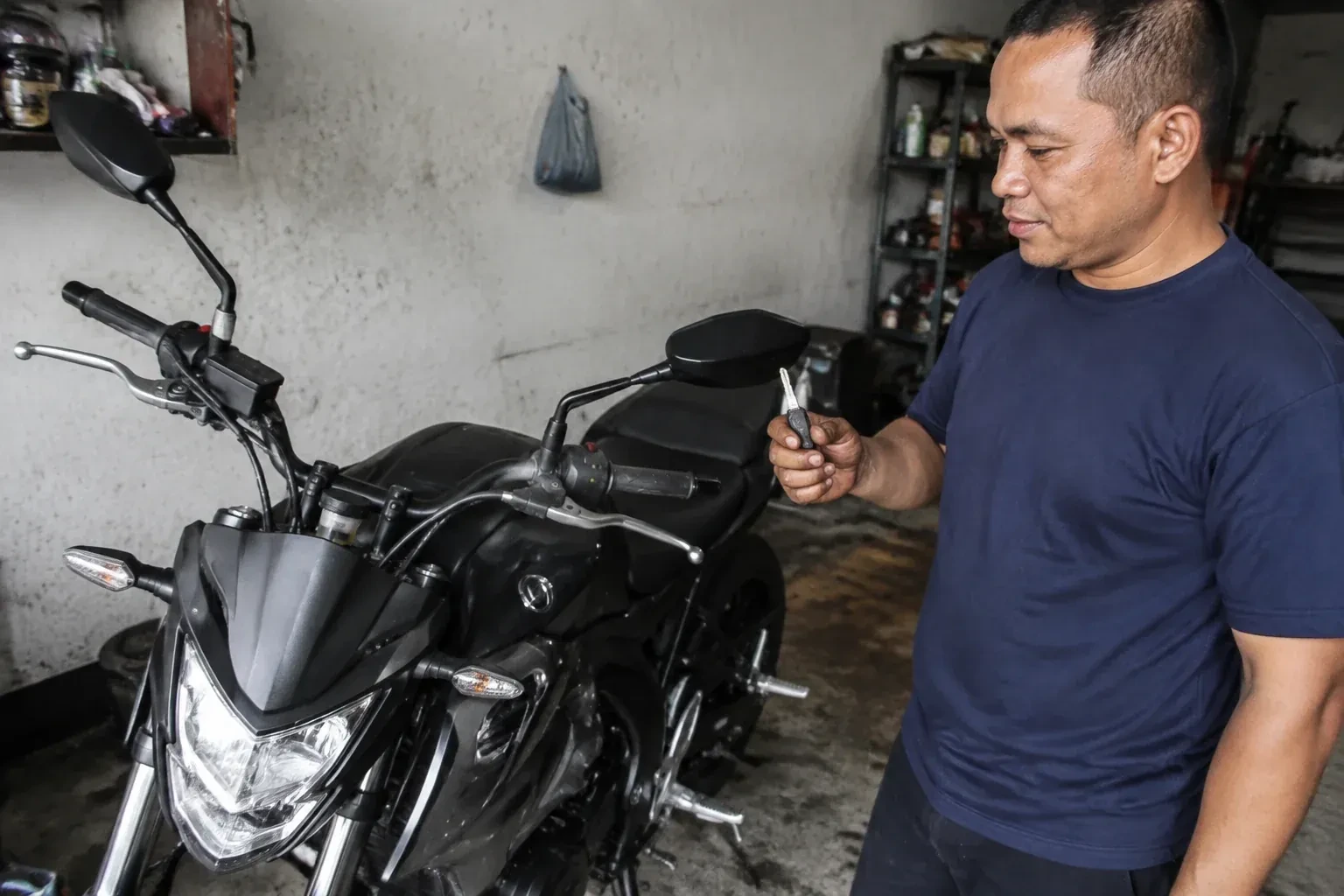
Car keys · Tyandaga
Motorcycle & Scooter Keys in Tyandaga
The key turns half a rotation in the ignition, catches, then the blade lets go with a small snap. The bow is still in your hand; the rest of it is somewhere inside a lock that now has nothing to grip.
Call now · open 24/7(289) 816-4986In plain words
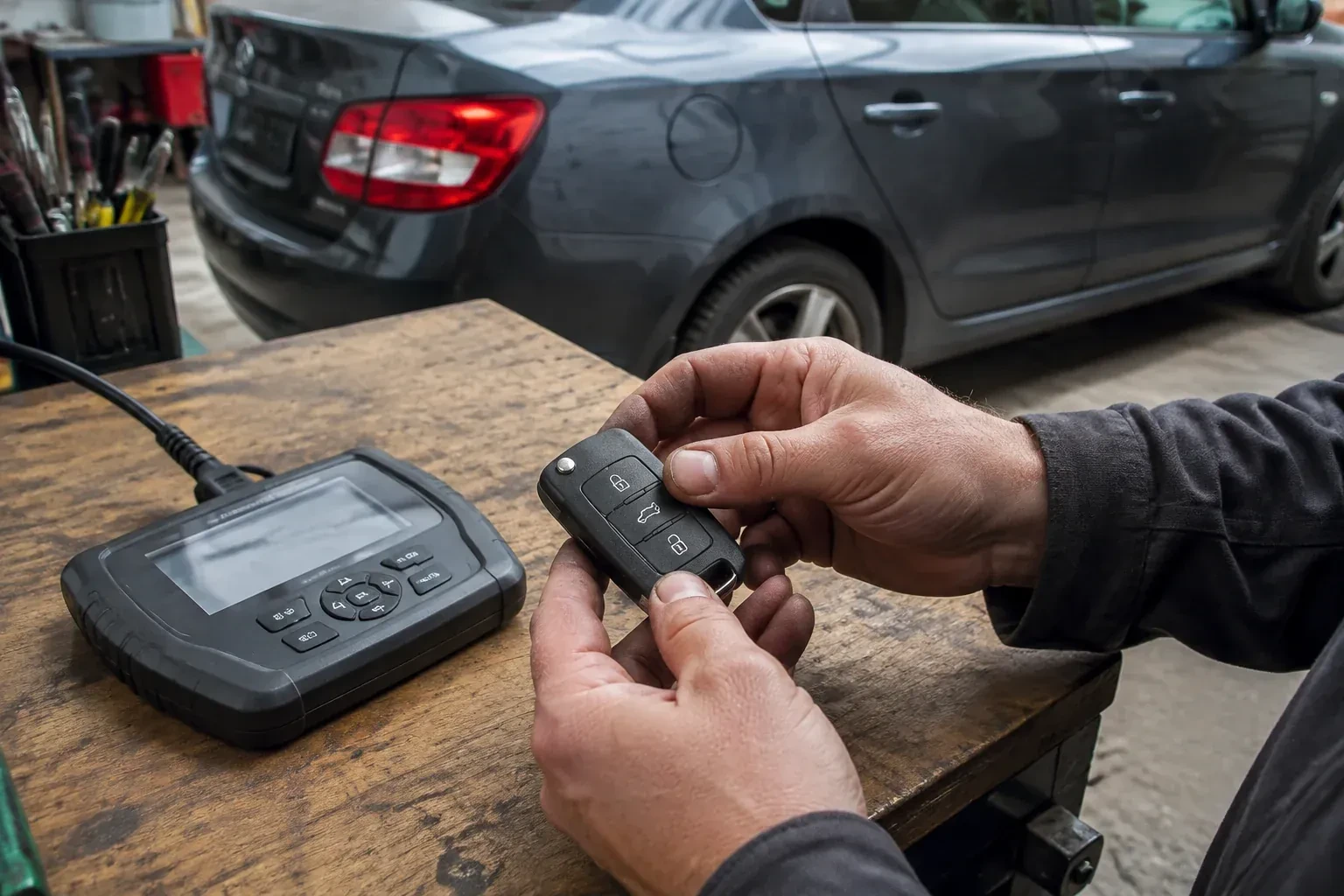
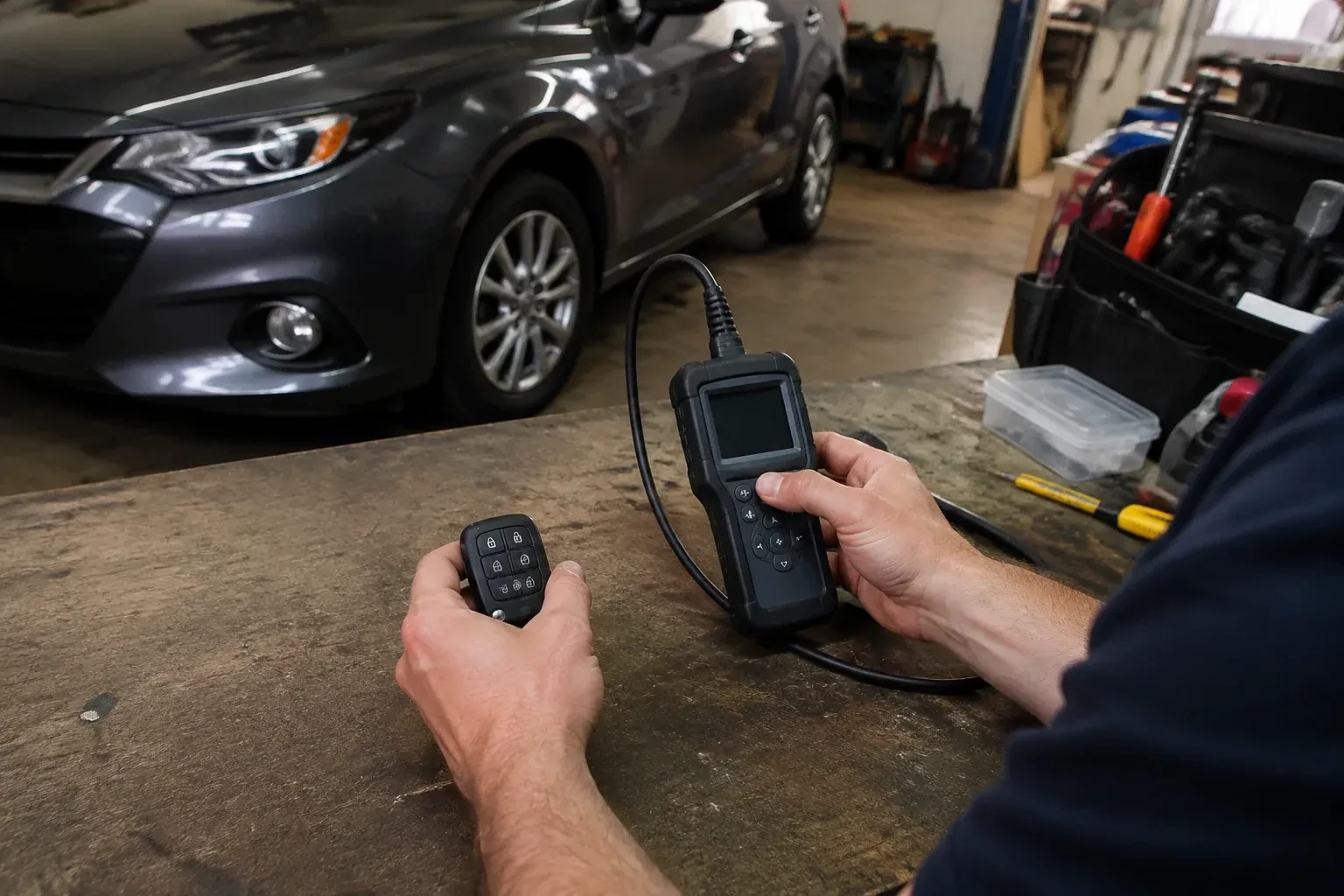
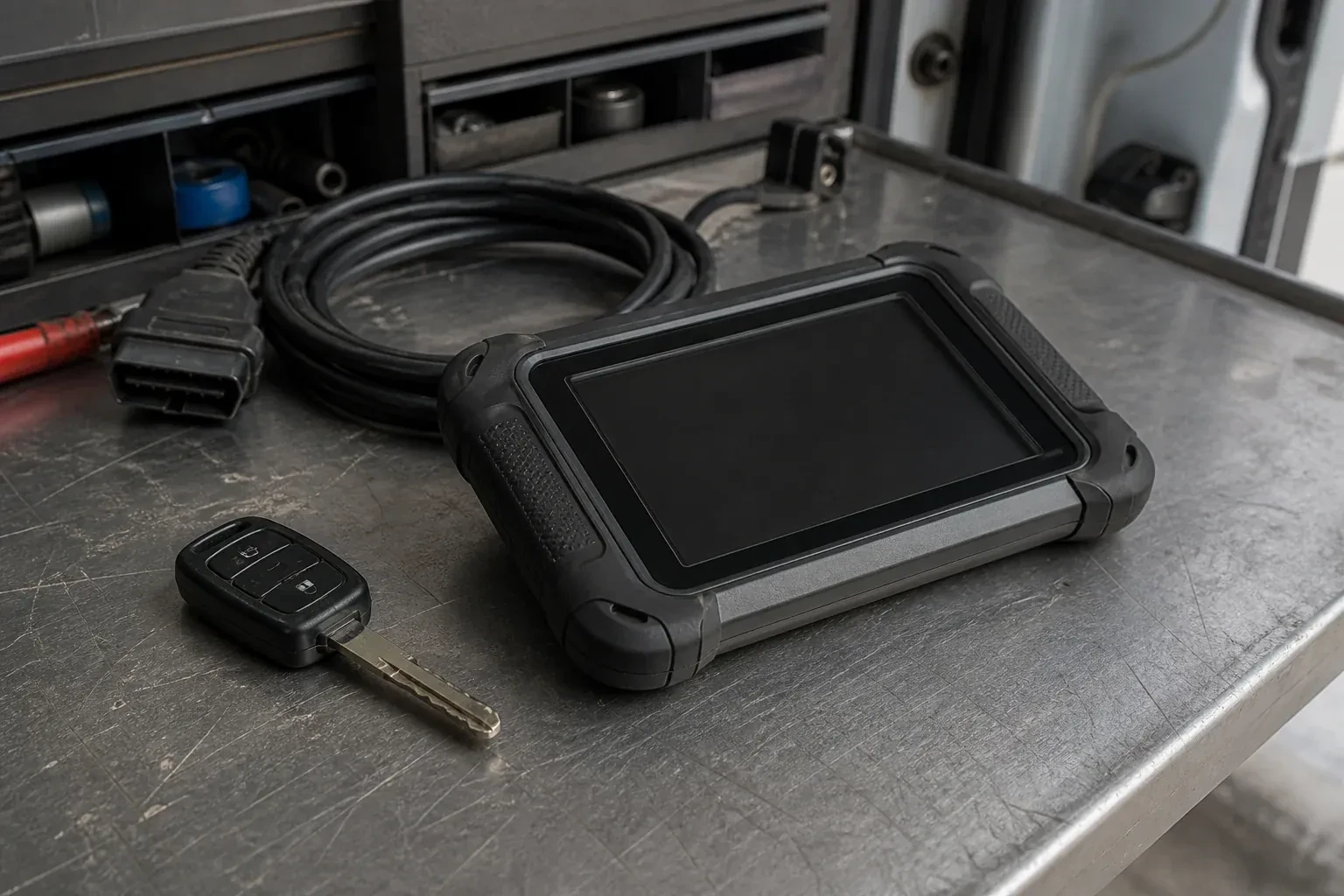
Newer machines add an electronic layer to a mechanical lock: a chip inside the key carries a coded signal that the ignition module checks before letting the engine run, so a correctly shaped blade that lacks the right chip will turn the switch without starting anything. Producing a working key for one of these machines means pairing a new transponder to the vehicle's electronics where that system supports it, using either an existing key as a reference or equipment built for it, though some systems need a dealer procedure or a code key only the manufacturer issues.
How the visit goesA copy cut at a hardware kiosk turns the ignition on some mornings and skips it on others, occasionally sticking halfway and needing a wiggle that the original key never required.
Motorcycle & Scooter Keys · Tyandaga
How the visit goes
- 1
Checking for an immobiliser
Many machines built in roughly the last two decades carry an electronic layer alongside the mechanical lock: a small chip inside the key that the ignition module checks before allowing the engine to run. The locksmith looks for a coil or ring around the ignition barrel, checks whether the dash shows a security alert with the current key, and asks whether the engine cranks without starting, which can point to a chip that is missing, damaged or unpaired, though ordinary fuel, ignition and compression faults produce the same symptom and are checked too. This decides whether the job is a straightforward cut or one that also needs transponder programming.
- 2
Decoding a lock with no key at all
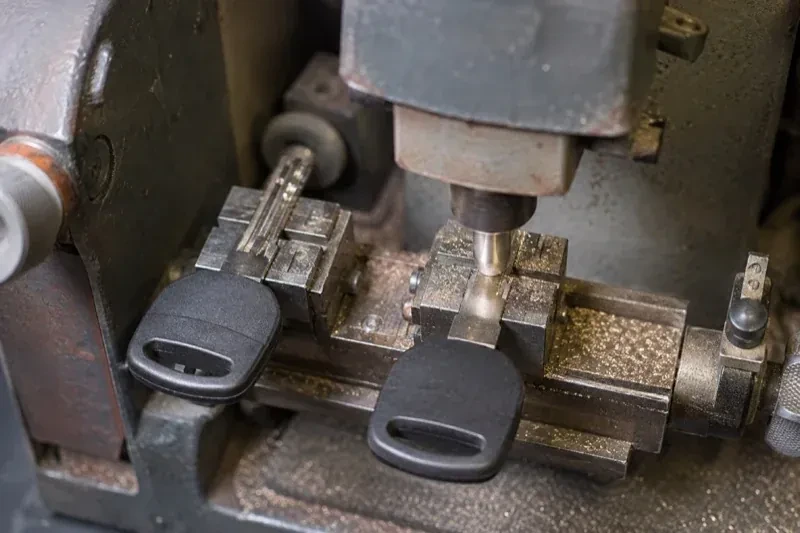
Without any key to copy, the lock has to speak for itself. The locksmith picks the cylinder and reads each wafer's resting depth with feeler tools or a small scope, or uses a decoder built for that keyway, translating what is found into a cutting code. A key is then cut to that code and tested in the lock before being trusted on the ignition proper. This route takes longer than copying an existing key, since every wafer has to be read individually, but it produces a key that matches the lock exactly rather than an approximation.
- 3
A key set that covers the whole machine
Where the locks are compatible, the visit ends with them all answering to the same key: ignition, steering, seat and, where fitted, the fuel cap or a storage compartment. Before leaving, each one is opened and closed again with the owner watching, so there is no guessing about which key does what. Carrying one key instead of two or three is a small change, but it is the detail most owners mention afterward, since a single blade on the ring is one less thing to sort through at the pump or on the side of the road.
In the van
- Torx and security bits
- Manufacturer-approved lock cleaner or lubricant
- Penetrating fluid
- Replacement transponder chips
- Pick and tension tools
What affects the quote
- 1
Whether an immobiliser is fitted
A machine with an immobiliser needs its electronics paired as well as its lock cut, which adds equipment and testing beyond a purely mechanical key, and is reflected as its own step in the quote.
- 2
Bringing multiple locks onto one key
Bringing the seat, fuel cap or a storage lock onto the ignition's key is extra work per lock rekeyed, separate from cutting the key itself, and is priced as its own line.
- 3
Condition of the existing lock
A clean, well-maintained lock accepts a new key with little extra work. One affected by corrosion or grit may need cleaning or light service before a key can be tested reliably against it.
Same fees day, night or weekend.
Motorcycle & Scooter Keys: questions
Do all motorcycles have an immobiliser these days?
Not all of them. Many machines built in roughly the last two decades carry a transponder chip and an ignition module that checks it, but plenty of smaller-displacement bikes, scooters and older machines still use a purely mechanical lock with no electronic layer at all. The locksmith checks for a coil around the ignition barrel and asks how the engine behaves with the current key to tell which type is on hand.
What should I do to look after a new key or lock afterward?
Very little beyond two simple habits: wipe the key clean before use, especially after a wet ride, and, where the lock's own maker calls for it, a light dose of the specified lubricant once or twice a year. Storing a spare somewhere other than on the machine itself rounds out the care a new key or lock generally needs.
Do I have to have the original key for you to cut a new one?
No. When every key for the machine is gone, the locksmith reads the lock directly, working out each wafer's depth by picking and reading the cylinder or using a decoder built for that keyway, and cuts a fresh key to the code that comes out of that reading. It takes longer than copying an existing key, since every wafer is read individually, but it produces a key that matches the lock rather than a guess.
Car Keys
Bigger photo, sooner job: Emergency Book soon Plan ahead
Motorcycle & Scooter Keys near you
Halton, Ontario
Tyandaga information
- Town
- Tyandaga, Halton, Ontario
- In business
- 16 years
- Hours
- Open 24/7 · nights, weekends and holidays, same fees
- Phone
- (289) 816-4986
- Visits
- On-site assessment preferred. Request a visit or call.
What the census means at the door
47%
Homes of every age. About 47% of homes in Burlington were built in 1980 or earlier, according to the 2021 Census.
In areas with homes from many decades, a locksmith gets to match the solution to the house rather than apply one answer everywhere. Period hardware stays on the houses that suit it; modern security goes where the door and the household want it.
50%
A mix of homes. Single-detached houses make up about 50% of homes in Burlington (2021 Census).
Mixed housing brings mixed hardware ages as well as types. A locksmith may rebuild a mortise lock on a semi-detached house and then set up a keypad on a townhouse door across the road, and treats each with the care its owner expects.
Open 24/7
Request a visit
The key turns half a rotation in the ignition, catches, then the blade lets go with a small snap.
Call now · open 24/7(289) 816-4986- On-site assessment preferred
- Same fees day, night or weekend
- 16 years in business