Clarksdale Locksmith SpecialistsService bulletin 3 of 3
Car Lockout Service: inside the visit
Winter makes its own lockouts.
Burlington, Ontario · Locksmith · open 24/7
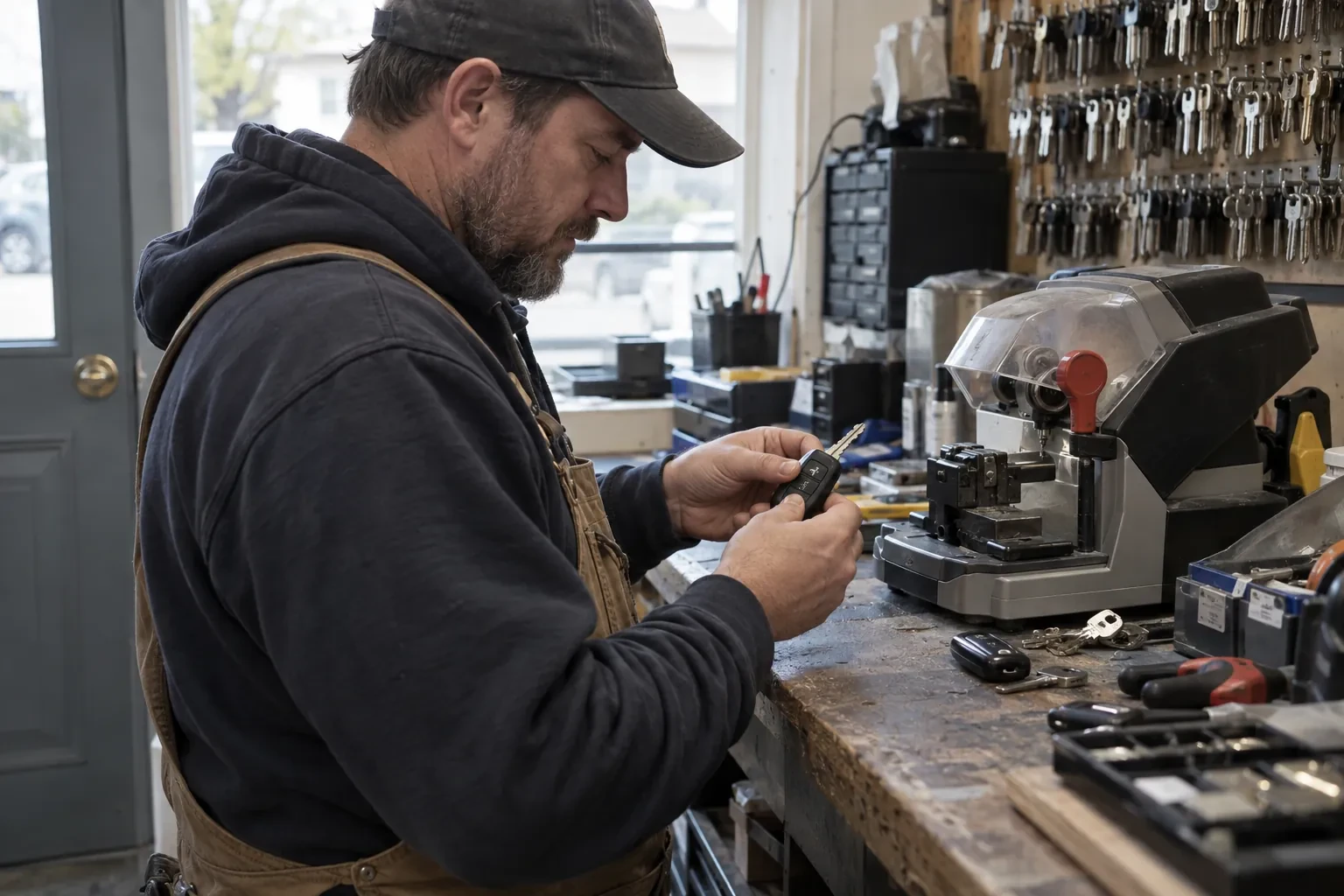
Winter makes its own lockouts. Slush runs into a door cylinder by day and freezes solid by night; a door bonds to its rubber seal in a cold snap; a fob battery gives up on the first minus-twenty morning; and a weak car battery leaves the remote with nothing to talk to. A cold-weather lockout visit treats the car gently: de-icer and warmth instead of force on a frozen cylinder, a careful release of a door stuck to its seal, a fresh coin battery in the fob, and a jump for the car if needed, then silicone on the seals so the next freeze passes quietly.
Proving the car is yours to open
Before a wedge or pick comes out, the locksmith confirms that the person asking has the right to be in that vehicle. Photo identification alongside the vehicle permit, the insurance card or a rental agreement settles it in a moment, because the permit carries the plate number and the owner's name and address. When those papers are in the glovebox, as they usually are, the locksmith notes your identification, opens the door, and matches the documents before leaving. A company vehicle is confirmed with a call to the fleet contact. Roadside clubs ask their contractors for the same thing, and it is the step that keeps your own car safe from a stranger's claim.
Dead fob or dead car battery
When a keyless car ignores its fob, the locksmith sorts out what failed. A fob that lights up but does nothing is checked, not assumed weak, since interference or fob damage look the same; once diagnosed, the vehicle's backup-entry method is used, often a mechanical blade in the driver's door cylinder, then a fresh battery. A car whose interior lights and horn are also dead has a flat twelve-volt battery, so the door is opened mechanically and a jump pack brings it back so the fob is read. Most push-button cars have a spot, on the start button or in the console, where a dead fob is held so the engine starts; the locksmith shows you where it is.
Keys in hand and a plan for the spare
Once the keys are back in your pocket, a minute on spares is well spent. A second key kept at home, with a family member or in a small lockbox at the house turns the next lockout into a phone call to someone you know. For a keyless car, the spare fob should be stored away from the car and away from the main fob, so a lost bag does not take both. If the vehicle came to you with a single key, the locksmith can cut and program a duplicate while the tools are out, and can show you how the mechanical blade hides inside the fob for the day the battery quits.